samedi 28 février 2026

this and that 2025-03-25 & 2026

Missed The Mark: Smartphones and Their Use In End Time Prophecy ----------------------------------- "https://smartphonesarethemark.blogspot.com/2012/06/missed-mark-smartphones-and-their-use.html?sc=1742904358665#c8238769199154972953" ------------------------------------------ "https://en.wikipedia.org/wiki/Virtu" ---------------------------------------------- "https://fr.wikipedia.org/wiki/Virtu" ---------------------------------------------- "https://fr.wikipedia.org/wiki/Raison_d'etat" -------------------------------------------------- "https://it.wikipedia.org/wiki/Niccol_Machiavelli" ------------------------------------------------ --------------------------------------------------------------------------- --------------------------------------------------------------------------- --------------------------------------------------------------------------- Extract The following observations are hardly more than a footnote, but a footnote to one of the most discussed questions of Machiavelli's thought, to his concept of virtù. When scholars became aware of the central importance of this term in Machiavelli's thought, they also realized that virtù was a most elusive term to which it was difficult to assign a precise and definite meaning; the term seemed to contain a great variety of meanings. In recent times, almost each new interpretation of Machiavelli's thought has implied a new intepretation of his virtù-concept, or, at least, has stressed the decisive significance of one particular factor among the various elements which went into the making of this concept. - On Machiavelli's Idea of Virtu Published online by Cambridge University Press: 20 November 2018
The oldest stories of golems date to early Judaism. In the Talmud (Tractate Sanhedrin 38b), Adam is initially created as a golem (גולם) when his dust is "kneaded into a shapeless husk".[7] Like Adam, all golems are created from mud by those close to divinity, but no anthropogenic golem is fully human. Early on, the main disability of the golem was its inability to speak. Sanhedrin 65b describes Rava creating a man (gavra), whom he then sends to Rav Zeira. Zeira speaks to the man, but he does not answer, whereupon Zeira says, "You were created by the sages; return to your dust".[a][8] During the Middle Ages, passages from the Sefer Yetzirah were studied as a means to create and animate a golem, although little in the writings of Jewish mysticism supports this belief. The earliest known written account of how to create a golem can be found in the Sode Raza, a commentary on Merkabah mysticism by Eleazar of Worms, who lived in the late 12th and early 13th centuries.[9] It was believed that golems could be activated by an ecstatic experience induced by the ritual use of various letters of the Hebrew alphabet[10] forming one of the names of God. This was written on a piece of paper and inserted into the mouth or forehead of the golem.[11] In some tales, including certain stories of the Chełm and Prague golems, a word such as אֱמֶת emeṯ 'truth' is inscribed on the golem, sometimes on its forehead. In this example, the golem could then be deactivated by removing the aleph (א),[12] thus changing the inscription from "truth" to "death" (מֵת, mēt, 'dead'). One source credits Solomon ibn Gabirol, who lived in the 11th century, with creating a golem,[13] possibly female, for household chores.[14] A legend also existed claiming that Samuel of Speyer created a golem in the 12th century.[15] In 1625, Joseph Solomon Delmedigo wrote that "many legends of this sort are current, particularly in Germany."[15] Golem of Chełm See also: Elijah Ba'al Shem of Chełm The oldest description of the creation of a golem by a historical figure is included in a tradition connected to the Baal Shem (folk healer) named Elijah of Chełm (1550–1583).[10][3][15][16] The Christian author Christoph Arnold in a letter written in 1674 reported the creation of a golem by Rabbi Eliyahu thusly: Polish Jews say that there was a Jew in Poland named Rabbi Eliyahu Baal Shem who made a golem from lime for the purpose of being a servant and doing housework. It was animated by having the word emes (truth) written on its forehead. But it kept on growing and getting stronger. To stop this, the alef needed to be erased from the word emes, leaving the word meis (dead). And when the rabbi noticed that the servant had grown so large that he could no longer reach its forehead and erase the letter, he came up with the trick of commanding the golem to take off its boots, assuming that when the golem bent over, he could erase the letter from its forehead. And so it was, but when the golem returned and turned into clay, all its weight fell on the rabbi and crushed him.[17] A similar account was reported by a unnamed Polish Kabbalist, writing in about 1730–1750,[18] And I have heard, in a certain and explicit way, from several respectable persons that one man [living] close to our time, whose name is R. Eliyahu, the master of the name, who made a creature out of matter [Heb. Golem] and form [Heb. tzurah] and it performed hard work for him, for a long period, and the name of emet was hanging upon his neck until he finally removed it for a certain reason, the name from his neck and it turned to dust.[10] The Rabi Jacob Emden elaborated on the story in his autobiography Megillas Sefer written in 1748: As an aside, I'll mention here what I heard from my father's holy mouth regarding the Golem created by his ancestor, the Gaon R. Eliyahu Ba'al Shem of blessed memory. When the Gaon saw that the Golem was growing larger and larger, he feared that the Golem would destroy the universe. He then removed the Holy Name that was embedded on his forehead, thus causing him to disintegrate and return to dust. Nonetheless, while he was engaged in extracting the Holy Name from him, the Golem injured him, scarring him on the face.[19] According to the Polish Kabbalist, "the legend was known to several persons, thus allowing us to speculate that the legend had indeed circulated for some time before it was committed to writing and, consequently, we may assume that its origins are to be traced to the generation immediately following the death of R. Eliyahu, if not earlier."[10] Classic narrative: The Golem of Prague Rabbi Loew statue at the New City Hall of Prague Old New Synagogue of Prague with the rungs of the ladder to the attic on the wall. In the legend, the Golem was in the loft The Úštěk Synagogue with a statue of a Golem in Úštěk Illustration by Philippe Semeria, 2009. The Hebrew word אמת, 'truth', is inscribed on the golem's forehead. The most famous golem narrative involves Judah Loew ben Bezalel, the late 16th-century rabbi of Prague, also known as the Maharal, who reportedly "created a golem out of clay from the banks of the Vltava River and brought it to life through rituals and Hebrew incantations to defend the Prague ghetto from antisemitic attacks and pogroms".[20][21] Depending on the version of the legend, the Jews in Prague were to be either expelled or killed under the rule of Rudolf II, the Holy Roman Emperor. The Golem was called Josef and was known as Yossele. He was said to be able to make himself invisible and summon spirits from the dead.[21] Rabbi Loew deactivated the Golem on Friday evenings by removing the shem before the Sabbath (Saturday) began,[11] so as to let it rest on Sabbath.[11] One Friday evening, Rabbi Loew forgot to remove the shem, and feared that the Golem would desecrate the Sabbath.[11] A different story tells of a golem that fell in love, and when rejected, became the violent monster seen in most accounts. Some versions have the golem eventually going on a murderous rampage.[21] The rabbi then managed to pull the shem from his mouth and immobilize him[11] in front of the synagogue, whereupon the golem fell in pieces.[11] The Golem's body was stored in the attic genizah of the Old New Synagogue,[21] where it would be restored to life again if needed.[22] Rabbi Loew then forbade anyone except his successors from going into the attic. Rabbi Yechezkel Landau, a successor of Rabbi Loew, reportedly wanted to go up the steps to the attic when he was Chief Rabbi of Prague to verify the tradition. Rabbi Landau fasted and immersed himself in a mikveh, wrapped himself in phylacteries and a prayer-shawl and started ascending the steps. At the top of the steps, he hesitated and then came immediately back down, trembling and frightened. He then reiterated Rabbi Loew's original warning.[23] According to legend, the body of Rabbi Loew's Golem still lies in the synagogue's attic.[11][21] When the attic was renovated in 1883, no evidence of the Golem was found.[24] Some versions of the tale state that the Golem was stolen from the genizah and entombed in a graveyard in Prague's Žižkov district, where the Žižkov Television Tower now stands. A recent legend tells of a Nazi agent ascending to the synagogue attic, dying under suspicious circumstances thereafter.[25] The attic is not open to the general public.[26] Some Orthodox Jews believe that the Maharal did actually create a golem. The evidence for this belief has been analyzed from an Orthodox Jewish perspective by Shnayer Z. Leiman.[27][28] Sources of the Prague narrative The general view of historians and critics is that the story of the Golem of Prague was a German literary invention of the early 19th century. According to John Neubauer,[29] the first writers on the Prague Golem were: 1837: Berthold Auerbach, Spinoza 1841: Gustav Philippson [de], Der Golam, eine Legende 1841: Franz Klutschak, Der Golam des Rabbi Löw 1842: Abraham Tendlau [de], Der Golem des Hoch-Rabbi-Löb[30] 1847: Georg Leopold Weisel [de], Der Golem A few slightly earlier examples are known, in 1834[31][32] and 1836.[33] All of these early accounts of the Golem of Prague are in German by Jewish writers. They are suggested to have emerged as part of a Jewish folklore movement parallel with the contemporary German folklore movement.[16] The origins of the story have been obscured by attempts to exaggerate its age and to pretend that it dates from the time of the Maharal. Rabbi Yudel Rosenberg (1859–1935)[34] of Tarłów, before moving to Canada where he became one of its most prominent rabbis, is said to have originated the idea that the narrative dates from the time of the Maharal. Rosenberg published Nifl'os Maharal (Wonders of Maharal) (Piotrków, 1909),[34] which purported to be an eyewitness account by the Maharal's son-in-law, who had helped to create the Golem. Rabbi Meir Mazuz commented that Rosenberg was a forger and stories of the Maharal creating a Golem stem from Rosenberg's fabrication.[35] Rosenberg claimed that the book was based upon a manuscript that he found in the main library in Metz. Wonders of Maharal "is generally recognized in academic circles to be a literary hoax".[10][28][36] Gershom Sholem observed that the manuscript "contains not ancient legends, but modern fiction".[37] Rosenberg's claim was further disseminated in Chayim Bloch's (1881–1973) The Golem: Legends of the Ghetto of Prague, English edition 1925. The Jewish Encyclopedia of 1906 cites the historical work Zemach David by David Gans, a disciple of the Maharal, published in 1592.[11][38] In it, Gans writes of an audience between the Maharal and Rudolph II: "Our lord the emperor ... Rudolph ... sent for and called upon our master Rabbi Low ben Bezalel and received him with a welcome and merry expression, and spoke to him face to face, as one would to a friend. The nature and quality of their words are mysterious, sealed, and hidden."[39][better source needed] But it has been said of this passage, "Even when [the Maharal is] eulogized, whether in David Gans' Zemach David or on his epitaph ..., not a word is said about the creation of a golem. No Hebrew work published in the 16th, 17th, and 18th centuries (even in Prague) is aware that the Maharal created a golem."[29] Furthermore, the Maharal himself did not refer to the Golem in his writings.[27] Rabbi Yedidiah Tiah Weil (1721–1805), a Prague resident, who described the creation of golems, including those created by Rabbis Avigdor Kara of Prague (died 1439) and Eliyahu of Chelm, did not mention the Maharal. Rabbi Meir Perils' biography of the Maharal[40] published in 1718 does not mention a golem.[16][27] Golem of Vilna A similar tradition relates to the Vilna Gaon or "the saintly genius from Vilnius" (1720–1797). Rabbi Chaim Volozhin (Lithuania 1749–1821) reported in an introduction to Sifra de Tzeniuta that he once presented to his teacher, the Vilna Gaon, ten different versions of a certain passage in the Sefer Yetzira and asked the Gaon to determine the correct text.[41] The Gaon immediately identified one version as the accurate rendition of the passage.[41] The amazed student then commented to his teacher that, with such clarity, he should easily be able to create a live human. The Gaon affirmed Rabbi Chaim's assertion and said that he once began to create a person when he was a child, under the age of 13, but during the process, he received a sign from Heaven ordering him to desist because of his youth.[41] Theme of hubris A statue of the Prague Golem created for the film The Emperor and the Golem The existence of a golem is sometimes a mixed blessing. Golems are not intelligent; if commanded to perform a task, they will perform the instructions literally. In many depictions, golems are inherently perfectly obedient. In its earliest known modern form, the Golem of Chełm became enormous and uncooperative. In one version of this story, the rabbi had to resort to trickery to deactivate it, whereupon it crumbled upon its creator and crushed him.[3] A similar theme of hubris is seen in Frankenstein, The Sorcerer's Apprentice, and some other stories in popular culture, such as The Terminator. The theme manifests itself in R.U.R. (Rossum's Universal Robots), Karel Čapek's 1921 play that coined the term robot. The play was written in Prague, and while Čapek denied that he modeled the robot after the golem, many similarities are seen in the plot.[42] Culture of the Czech Republic The golem is a popular figure in the Czech Republic. The 1915 novel by Gustav Meyrink (The Golem) was briefly popular and did much to keep the imagination about the golem going. Several restaurants and other businesses have names that make reference to the creature. A Czech strongman, René Richter goes by the nickname "Golem",[21] and a Czech monster truck outfit calls itself the "Golem Team".[43] Abraham Akkerman preceded his article on human automatism in the contemporary city with a short satirical poem on a pair of golems turning human.[44] Clay Boy variation A Yiddish and Slavic folktale is the Clay Boy, which combines elements of the golem and The Gingerbread Man, in which a lonely couple makes a child out of clay, with disastrous or comical consequences.[45] In one common Russian version, an older couple, whose children have left home, make a boy out of clay and dry him by their hearth. The Clay Boy (Russian: Гли́няный па́рень, Glínyanyĭ párenʹ) comes to life; at first, the couple is delighted and treats him like a real child, but the Clay Boy does not stop growing and eats all their food, then all their livestock, and then the Clay Boy eats his parents. The Clay Boy rampages through the village until he is smashed by a quick-thinking goat.[46][47] Golem in popular culture Golem depicted at Madame Tussauds in Prague This article may contain irrelevant references to popular culture. Please help improve it by removing such content and adding citations to reliable, independent sources. (June 2023) In popular culture, the term "golem" is often used to refer to "any magically created human figure" rather than specifically "a humanoid formed by Kabbalistic means".[48] Film and television Golems are frequently depicted in movies and television shows. Programs with them in the title include: The Golem (German: Der Golem, shown in the United States as The Monster of Fate), a 1915 German silent horror film, written and directed by Paul Wegener and Henrik Galeen. The Golem and the Dancing Girl (German: Der Golem und die Tänzerin), a 1917 German silent comedy-horror film, directed by Paul Wegener and Rochus Gliese. The Golem: How He Came into the World (German: Der Golem, wie er in die Welt kam, also referred to as Der Golem), a 1920 German silent horror film, directed by Paul Wegener and Carl Boese. Le Golem (Czech: Golem), a 1936 Czechoslovak monster movie directed by Julien Duvivier in French. The Emperor and the Golem (Czech: Císařův pekař-Pekařův císař), a 1952 Czechoslovak movie starring Jan Werich.[49][50] The Limehouse Golem, a 2016 film about a fictional series of Jack the Ripper-esque murders in Victorian London. Other references to golems in popular culture include: The Golem (German: Der Golem), the first novel by Gustav Meyrink and adapted for television in 1967, for film in 1980, and for the stage in 2013. Daimajin, a 1966 Japanese kaiju film directed by Kimiyoshi Yasuda.[51] It!, a 1967 British horror film directed by Herbert J. Leder.[52] "Kaddish", a 1997 episode of The X-Files.[53][better source needed] The 1995 Gargoyles episode "Golem" featured a golem made in the image of a stone statue that was created by Rabbi Loew (voiced by Victor Brandt) to defend the Jewish inhabitants of Prague from raiders and had been passed down to his descendant Max Loew (voiced by Scott Weil). The 1997 Extreme Ghostbusters series depicts a Rabbi's son bringing a golem to life to protect a local New York synagogue from antisemitic vandalism in the episode "The True Face of a Monster". "You Gotta Know When to Golem" is a short story during "Treehouse of Horror XVII", part of the long-running series of The Simpsons Halloween specials. The Golem, voiced by Richard Lewis, is controlled via paper notes by Bart and used to wreak havoc on the citizens of Springfield. Inglourious Basterds, a 2009 film written and directed by Quentin Tarantino, includes a fictional version of Adolf Hitler repeating fearful speculation that "The Bear Jew," who kills German soldiers with a bat, is a golem.[54][55][56] In the fourth episode of season 4 of Grimm ("Dyin' on a Prayer"), a golem plays an important role. The 2013 Supernatural episode "Everybody Hates Hitler" features a golem (portrayed by John DeSantis) who had been used to fight the Nazis in Belarus during World War II. In the present, the golem has been passed down from Rabbi Bass (portrayed by Hal Linden) to his grandson Aaron Bass (portrayed by Adam Rose). While Aaron had a hard time controlling the golem at first, they did help Sam Winchester and Dean Winchester fight against a group of Nazi necromancers led by Commandant Eckhart (portrayed by Bernhard Forcher). The 2019 Netflix series The Order features a recurring character (portrayed by Dylan Playfair) who is revealed to be a golem in season 1. The majority of the CW series Legacies (a spin-off of The Vampire Diaries) centers around defeating a golem. The Golem, a 2018 Israeli horror film features the Golem, who takes the form of a dead child. Literature "El Golem" is a poem by Jorge Luis Borges, published in 1959, and later published as part of the 1964 book El otro, el mismo (The other, the self). The poem tells the story of Judah Loew and his creation of the Golem. In the poem, Borges quotes the works of German Jewish philosopher Gershom Scholem and Cratylus by Plato. Marge Piercy's 1991 science fiction novel, He, She and It, features intertwined narratives, one of which is a retelling of the story of Rabbi Loew and his creation of a golem in medieval Prague. Terry Pratchett's 1996 Discworld novel Feet of Clay features a number of golems who reside in the city of Ankh-Morpork. Golems also appear in Going Postal and Making Money and make cameos throughout the remainder of the series. They fulfil the same role as robots but some develop more personality. Thomas Pynchon's 1997 novel Mason & Dixon features a giant golem, described as a "Jewish Automaton, taller than the most ancient of the Trees," which was purportedly created by a Native American tribe believed to be one of the Lost Tribes of Israel; having escaped its creators' control, the golem roams the wilderness having learned how to be invisible. Golems play a large role in Mary Gentle's novel Ash: A Secret History. Ted Chiang's 2000 novella "Seventy-Two Letters" focuses on an alternate history of the world where science and technology are based on the use of golems and, accordingly, the Kabbalistic names embedded in them. Michael Chabon's 2000 novel The Amazing Adventures of Kavalier & Clay features a story of a Golem like creature that is shipped to the United States. The 2004 book The Golem's Eye by Jonathan Stroud features a magically rendered golem as the main threat. David Brin's 2002 science fiction book, Kiln People, is based on the premise that people can make short-lived clay-based copies of themselves. The golems have the same motives and memories as the humans that made them. Brandon Mull's 2006 book series Fablehaven prominently contains a golem character, one which is more faithful to traditional portrayals through its depiction as a protector of the community. Catherynne M. Valente's novel The Girl Who Circumnavigated Fairyland and later books in the series feature a golem made of soap, Lye, as a recurring character. The Marvel Comics superhero, Captain America, as the character's creators, Joe Simon and Jack Kirby, originally conceived of him, has been described as a variant of the Golem concept: a protector of the Jewish community created by one of its elders (Dr. Abraham Erskine).[57] The Golem and the Jinni is a debut novel written by Helene Wecker, published by Harper in April 2013. It combines the genre of historical fiction with elements of fantasy, telling the story of two displaced magical creatures in 19th century New York City, reflecting the fate of contemporary immigrants to the USA.[58][59][60] The Golem of Hollywood, a supernatural mystery by writers Jonathan Kellerman and Jesse Kellerman, weaves the legend of the Golem into a Los Angeles murder mystery. This golem is described as female.[61] Dan Brown's 2025 novel The Secret of Secrets is set in Prague and includes a figure inspired by the legend of the Golem.[62] Tabletop and video games Golems appear in the fantasy role-playing game Dungeons & Dragons (first published in 1974), and the influence of Dungeons & Dragons has led to the inclusion of golems in other tabletop role-playing games, as well as in video games.[63] There are many varieties of golems in the game,[64] and Backstab [fr] reviewer Philippe Tessier called the creature a "classic of D&D".[65] The clay golem is based on the golem of Medieval Jewish folklore, though changed from "a cherished defender to an unthinking hulk".[66][67] The flesh golem is related to Frankenstein's monster as Universal's 1931 film, seen in e.g. being empowered by electricity,[68] though again with the difference of being essentially an unthinking machine in the game.[69] D&D's golems are also rooted in Gothic fiction more generally, and are typical denizens of the Ravenloft setting.[70] The flesh golem was ranked ninth among the ten best mid-level monsters by the authors of Dungeons & Dragons For Dummies for both 3rd[69] and 4th edition.[71] Golems are recurring characters in the Dragon Quest/Dragon Warrior video game series.[72][73] There is a golem character in Little Samson, a game released on the Nintendo Entertainment System.[74][75] Golems are a recurring character in the Final Fantasy series of video games.[76][77] Games in the Minecraft franchise contain many different types of golems. In the main game, there are iron, snow and copper golems.[78][79][80] In Minecraft Dungeons, there is the Redstone Golem. In Minecraft Legends, there are Cobblestone Golems, Plank Golems, Mossy Golems, and Grindstone Golems.[81] Golem is the name of a Pokémon whose body is made of rocks. Golett and Golurk are two Pokémon inspired by the Golem of Prague.[82] A golem features prominently in The Ghost and the Golem, a 2024 Jewish historical fantasy interactive fiction game by Benjamin Rosenbaum, on the Choice of Games platform.[83] Music A number of scores have been written to accompany or based on the 1920 film, including by Daniel Hoffman and performed by the San Francisco-based ensemble Davka[84] and by Karl-Errnst Sasse.[85] In 1962, Abraham Ellstein's opera The Golem, commissioned by the New York City Opera, premiered at City Opera, New York.[86] In 1994, composer Richard Teitelbaum composed "Golem", based on the Prague legend and combining music with electronics.[87] Other GOLEM was the name given to three custom-made computers built in the Weizmann Institute of Science in Israel during the 1960s.[88] See also Artificial intelligence Brazen head Czech folklore Dybbuk Frankenstein's monster The Gingerbread Man and Kolobok (edible golems) Homunculus Kratt Pinocchio Prometheus Pygmalion and Galatea Creation of life from clay Shabti Talos Totem Tulpa Tupilaq Zombie Notes Jewish Babylonian Aramaic: מן חבריא את הדר לעפריך References Cooper, Marilyn. Jewish Word | Golem". Archived 25 August 2017 at the Wayback Machine Moment. 17 July 2017. 24 August 2017. "Definition of GOLEM". www.merriam-webster.com. Retrieved 17 October 2025. Introduction to "The Golem Returns" Archived 12 October 2012 at the Wayback Machine. Retrieved 23 September 2011. J. Simpson; E. Weiner, eds. (1989). "golem". Oxford English Dictionary (2nd ed.). Oxford: Clarendon Press. ISBN 0-19-861186-2. "Pirkei Avot 5:7". www.sefaria.org. Bluestein, Gene (1998). Anglish/Yinglish: Yiddish in American Life and Literature. U of Nebraska Press. ISBN 0803219148. Archived from the original on 3 February 2021. Retrieved 17 October 2020. "Sanhedrin 38b". sefaria.org. Retrieved 15 November 2024. "Sanhedrin 65b". Sefaria. Retrieved 15 November 2024. Kressel, Matthew (1 October 2015). "36 Days of Judaic Myth: Day 24, The Golem of Prague". Matthew Kressel. Archived from the original on 2 August 2018. Retrieved 2 August 2018. Idel, Moshe (1990). Golem: Jewish Magical and Mystical Traditions on the Artificial Anthropoid. Albany, New York: State University of New York Press. ISBN 0-7914-0160-X. page 296 GOLEM Archived 25 January 2022 at the Wayback Machine. Jewish Encyclopedia. Retrieved on 23 September 2011. Kerstein, Benjamin. Jewish Ideas Daily. 14 September 2010. 24 August 2017. Bokser, Ben Zion (2006). Dragons den: Dragon Quest Fansite". "Little Sampson game review". Honest Gamers. "Little Sampson game review". Cousin Gaming. 23 August 2016. "Recurring monsters in Final Fantasy". 11 December 2020. "Specific instance of a Golem in Final Fantasy". gamerant.com. 3 January 2021. Stone, Tom (27 February 2017). "Meet the Iron Golem". Retrieved 28 April 2023. Lele, Nutan (21 March 2023). "How to Make a Snow Golem in Minecraft". AFKGaming. Retrieved 28 April 2023. Anderca, Cristina (1 July 2025). "A new friend with a familiar patina". Anderca, Cristina (12 October 2022). "New Friends: The Golems of Minecraft Legends". Retrieved 28 April 2023. Lucas Sullivan (8 February 2014). "17 Pokemon based on real-world mythology". GamesRadar. Retrieved 27 January 2016. "The Ghost and the Golem". Choice of Games. Retrieved 29 August 2024. "Davka - the Golem - Amazon.com Music". Amazon. Archived from the original on 8 March 2021. Retrieved 3 March 2020. "Der Golem". Amazon. Archived from the original on 13 March 2021. Retrieved 3 March 2020. "Abraham Ellstein's the Golem". "Teitelbaum: Golem". Amazon. 1995. Archived from the original on 12 March 2021. Retrieved 3 March 2020. אורני, אמיר (2 June 2020). "WEIZAC and GOLEM: The Start-Up Nation's Earliest Computers". The Librarians. Retrieved 30 April 2025. Further reading Baer, Elizabeth R. (2012). The Golem Redux: From Prague to Post-Holocaust Fiction. Detroit, MI: Wayne State University. ISBN 978-0814336267. Bilski, Emily B. (1988). Golem! Danger, Deliverance and Art. New York: The Jewish Museum. ISBN 978-0873340496. Bloch, Chayim (1987). The Golem: Mystical Tales of the Ghetto of Prague. Translated by Schneiderman, H. New York: Rudolf Steiner Publications. ISBN 0833400258. English translation from German. First published in Oestereschischen Wochenschrift 1917. Bokser, Ben Zion (2006). From the World of the Cabbalah. New York: Kessinger. ISBN 9781428620858. Chihaia, Matei (2011). Der Golem-Effekt. Orientierung und phantastische Immersion im Zeitalter des Kinos. Bielefeld: transcript. ISBN 978-3-8376-1714-6. Dennis, Geoffrey (2007). The Encyclopedia of Jewish Myth, Magic, and Mysticism. Woodbury, MN: Llewellyn Worldwide. ISBN 978-0-7387-0905-5. Eichhorst, Dana (2023/24). "A New Reading of “Golem” Based on Elʿazar of Worms Sode Razayya". Frankfurter Judaistische Beiträge. 45. 75-96. ISSN 0342-0078. Faucheux, Michel (2008). Norbert Wiener, le golem et la cybernétique. Paris: Editions du Sandre. Goldsmith, Arnold L. (1981). The Golem Remembered 1909–1980: Variations of a Jewish Legend. Detroit: Wayne State University Press. ISBN 0814316832. Idel, Mosche (1990). Golem: Jewish Magical and Mystical Traditions on the Artificial Anthropoid. Albany, NY: State University of New York Press. ISBN 0-7914-0160-X. Montiel, Luis (30 June 2013). "Proles sine matre creata: The Promethean Urge in the History of the Human Body in the West". Asclepio. 65 (1): 001. doi:10.3989/asclepio.2013.01. Rosenberg, Yudl (2008). The Golem and the Wondrous deeds of the Maharal of Prague. Translated by Leviant, Curt. Yale University Press. ISBN 978-0-300-12204-6. First English translation of original in Hebrew, Pietrkow, Poland, 1909. Salfellner, Harald (2016). The Prague Golem: Jewish Stories of the Ghetto. Prague: Vitalis. ISBN 978-80-7253-188-2. Tomek, V.V. (1932). Pražské židovské pověsti a legendy. Prague: Končel. Translated (2008) as Jewish Stories of Prague: Jewish Prague in History and Legend. ISBN 1-4382-3005-2. Winkler, Gershon (1980). The Golem of Prague: A New Adaptation of the Documented Stories of the Golem of Prague. New York: Judaica Press. ISBN 0-910818-25-8. External links Wikimedia Commons has media related to Golem. /blockquote>

vendredi 22 septembre 2023

RB and The Inquisition
The 1578 edition of the Directorium Inquisitorum (a standard Inquisitorial manual) spelled out the purpose of inquisitorial penalties: ... quoniam punitio non refertur primo & per se in correctionem & bonum eius qui punitur, sed in bonum publicum ut alij terreantur, & a malis committendis avocentur (translation: "... for punishment does not take place primarily and per se for the correction and good of the person punished, but for the public good in order that others may become terrified and weaned away from the evils they would commit").
Before the 12th century, the Catholic Church suppressed what they believed to be heresy, usually through a system of ecclesiastical proscription or imprisonment, but without using torture, and seldom resorting to executions. Such punishments were opposed by a number of clergymen and theologians, although some countries punished heresy with the death penalty. Pope Siricius, Ambrose of Milan, and Martin of Tours protested against the execution of Priscillian, largely as an undue interference in ecclesiastical discipline by a civil tribunal. Though widely viewed as a heretic, Priscillian was executed as a sorcerer. Ambrose refused to give any recognition to Ithacius of Ossonuba, "not wishing to have anything to do with bishops who had sent heretics to their death"
"https://en.wikipedia.org/wiki/Priscillianism"
Priscillianism was a Christian sect developed in the Iberian Peninsula under the Roman Empire in the 4th century by Priscillian. It is derived from the Gnostic doctrines taught by Marcus, an Egyptian from Memphis. Priscillianism was later considered a heresy by both the Eastern Orthodox Church and the Roman Catholic Church.
The Priscillianists taught a Gnostic doctrine of dualism, a belief in the existence of two kingdoms, one of Light and one of Darkness. Angels and the souls of men were said to be severed from the substance of the Deity. Human souls were intended to conquer the Kingdom of Darkness, but fell and were imprisoned in material bodies. Thus both kingdoms were represented in man. Their conflict was symbolized on the side of Light by the Twelve Patriarchs, heavenly spirits, who corresponded to certain of man's powers, and on the side of Darkness by the Signs of the Zodiac, the symbols of matter and the lower kingdom. The salvation of man consists in liberation from the domination of matter. The twelve heavenly spirits having failed to accomplish their release, the Saviour came in a heavenly body that appeared to be like that of other men. Through His doctrine and His apparent death, he released the souls of the men from the influence of earthly matter. These doctrines could be harmonized with the teaching of Scripture only by a complex system of exegesis, rejecting conventional interpretations and relying on personal inspiration. The Priscillians respected most of the Old Testament but rejected the Creation story. They believed that several of the apocryphal Scriptures were genuine and inspired. Because the Priscillians believe that matter and nature were evil, they became ascetics and fasted on Sundays and Christmas Day. Because their doctrines were esoteric and exoteric, and because it was believed that men in general could not understand the higher paths, the Priscillianists, or at least those of them who were enlightened, were permitted to tell lies for the sake of a holy end. Augustine wrote a famous work, "Contra Mendacium" ("Against Lying"), in reaction to this doctrine.
"https://en.wikipedia.org/wiki/Asceticism"
Avoiding both these extremes, the Perfect One has realized the Middle Path; it gives vision, gives knowledge, and leads to calm, to insight, to enlightenment and to Nibbana. And what is that Middle Path realized by the Tathagata...? It is the Noble Eightfold Path, and nothing else, namely: right understanding, right thought, right speech, right action, right livelihood, right effort, right mindfulness and right concentration
Other early sources like the Kaccānagotta-sutta also state that "the Tathagatha teaches by the middle way" (majjhena tathāgato dhammaṃ deseti) which often refers to the doctrine of dependent origination as a view between the extremes of eternalism and annihilationism as well as the extremes of existence and non-existence. Gethin 78 According to Bhikkhu Bodhi, there are two extreme metaphysical views that are avoided through the Buddha's “teaching by the middle” (majjhena dhammaṃ):
Eternalism (sassatavāda), this refers to the view that there is "an indestructible and eternal self, whether individual or universal". It can also refer to the idea that the world is maintained by a permanent being or entity, like God or some other eternal metaphysical Absolute. The main problem with this view is that it leads to grasping at the five aggregates, which are impermanent and empty of a self.
Annihilationism (ucchedavāda), is the idea that a person is utterly annihilated at death and there is nothing which survives. The main problem with this view is that it leads to nihilism, particularly ethical nihilism.
"https://en.wikipedia.org/wiki/Middle_Way"
Back to the "Spanish inquisition" (monty python)

mercredi 28 juin 2023

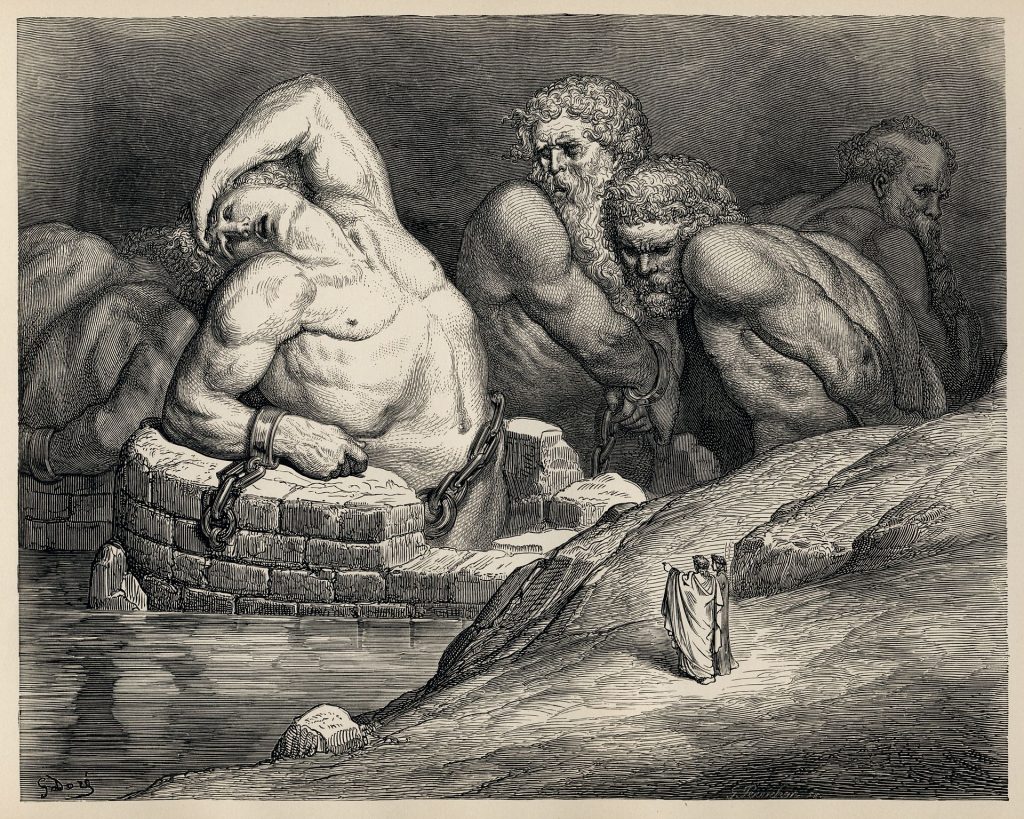
Central Well of Malebolge / Dante
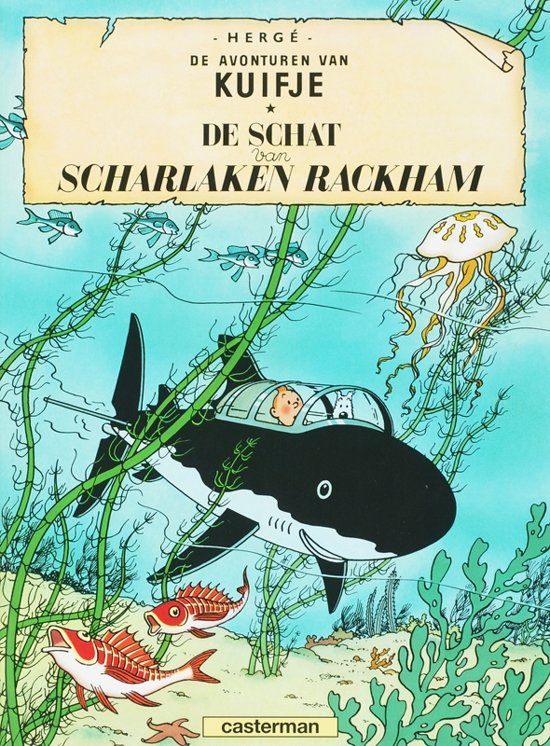
Ocean games and ocean prizes https://fr.wikipedia.org/wiki/Paul-Henri_Nargeolet Il rejoint l’Institut français de recherche pour l'exploitation de la mer après 22 ans de service dans la Marine nationale10,11 et devient responsable des sous-marins d’intervention profonde Cyana et Nautile12. Avec celui-ci, il réussit en 1987 sa première longue descente vers l'épave du Titanic13,14. Il rejoint ensuite la société RMS Titanic Inc., titulaire des droits sur l'épave, comme responsable des opérations sous-marines11. Il a été le premier en 1993 à avoir remonté à la surface 5 500 objets du navire12, qui appartenaient notamment aux victimes, durant 32 plongées15. Il a participé à huit expéditions : trois avec l’Ifremer, trois avec RMS Titanic Inc., une avec Caladan Oceanic en 2019 et une avec OceanGate en effectuant cinq plongées durant l’été 2021. l est depuis novembre 2018 consultant technique de l'entreprise Caladan Oceanic de Victor Vescovo, notamment sur la mission Titanic Survey Expedition. Le submersible utilisé est le seul à être certifié pour plonger jusqu'à 11 000 mètres de profondeur avec deux personnes à bord https://fr.wikipedia.org/wiki/Nautile_(sous-marin_de_poche) https://fr.wikipedia.org/wiki/Sous-marin_de_poche https://en.wikipedia.org/wiki/Midget_submarine https://en.wikipedia.org/wiki/Stockton_Rush https://en.wikipedia.org/wiki/Victor_Vescovo Vescovo served 20 years in the U.S. Navy Reserve as an intelligence officer, retiring in 2013 as a Commander
Blue Origin, LLC is an American aerospace, defense, space exploration company and launch service provider headquartered in Kent, Washington, United States.[2] Blue Origin makes rocket engines for the United Launch Alliance and other customers. The company also manufactures rockets, spacecrafts and heavy-lift launch vehicles. The company was selected as the second provider for lunar lander services for NASA's Artemis program and was awarded a $3.4 billion contract.[3] The company has three engines in production including the BE-3U, BE-3PM and BE-4. The company is working on a fourth advanced rocket engine, called the BE-7, which is still under development and when completed, will be used on planetary bodies other than Earth
Maritime history exploration In 2019, Vescovo escorted Titanic-historian Parks Stephenson to the wreck of the RMS Titanic for the first revisit of the wreck in 15 years. Findings included continued extensive corrosion and bacterial growth on iron and steel surfaces.[19] Vescovo piloting his submersible during the first of two dives to the wreck of the French submarine Minerve In February 2020, Vescovo piloted his deep diving submersible twice to the wreck of the French submarine Minerve in the Mediterranean Sea. The retired French Rear Admiral Jean-Louis Barbier investigated the wreck of the Minerve on the first dive. On the second dive, Vescovo was accompanied by Hervé Fauve, the son of the captain of the sunken submarine. They placed a commemorative plaque at the wreck.[20] In 2021, Vescovo identified and surveyed the wreck of the USS Johnston (DD-557) at a depth of 6,456 metres (21,181 ft) in the Philippine Sea; at the time of identification this was the deepest shipwreck ever surveyed. The Johnston was sunk during the Battle off Samar (1944) in one of the most lopsided naval battles in history.[21] In 2022 a submersible expedition piloted by Vescovo located the wreck of destroyer escort USS Samuel B. Roberts (DE-413) (also sunk in the Battle off Samar in 1944), in the Philippine Sea at a depth of 6,895 metres (22,621 ft), making it the deepest wreck identified at this dat

lundi 3 août 2020

Superman

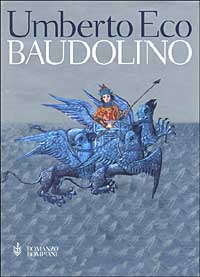
 https://en.wikipedia.org/wiki/Baudolino


 ???

Paul and Gnosticism 


 https://en.wikipedia.org/wiki/Gnosticism#Paul_and_Gnosticism
Tertullian calls Paul "the apostle of the heretics", because Paul's writings were attractive to gnostics, and interpreted in a gnostic way, while Jewish Christians found him to stray from the Jewish roots of Christianity. In I Corinthians Paul refers to some church members as "having knowledge" (Greek: τὸν ἔχοντα γνῶσιν, ton echonta gnosin). James Dunn claims that in some cases, Paul affirmed views that were closer to gnosticism than to proto-orthodox Christianity.
According to Clement of Alexandria, the disciples of Valentinus said that Valentinus was a student of a certain Theudas, who was a student of Paul, and Elaine Pagels notes that Paul's epistles were interpreted by Valentinus in a gnostic way, and Paul could be considered a proto-gnostic as well as a proto-Catholic. Many Nag Hammadi texts, including, for example, the Prayer of Paul and the Coptic Apocalypse of Paul, consider Paul to be "the great apostle". The fact that he claimed to have received his gospel directly by revelation from God appealed to the gnostics, who claimed gnosis from the risen Christ. The Naassenes, Cainites, and Valentinians referred to Paul's epistles. Timothy Freke and Peter Gandy have expanded upon this idea of Paul as a gnostic teacher; although their premise that Jesus was invented by early Christians based on an alleged Greco-Roman mystery cult has been dismissed by scholars. However, his revelation was different from the gnostic revelations.

Simon Magus, also known as Simon the Sorcerer and Simon the Magician, came from the village of Gitta (also spelled Getta) in Samaria, according to Justin Martyr;[12] a site settled by the tribe of Dan according to Josephus.[ Justin, who was himself a 2nd-century native of Samaria, wrote that nearly all the Samaritans in his time were adherents of Simon. Surviving orthodox texts, such as those of Irenaeus, Justin Martyr, Hippolytus, and Epiphanius, regarded Simon as the source of all heresies, including Gnosticism.
Ethiopian Jews, also known as Beta Israel, claim descent from the Tribe of Dan, whose members migrated south along with members of the tribes of Gad, Asher, and Naphtali, into the Kingdom of Kush, now Ethiopia and Sudan, during the destruction of the First Temple.
  Their primary trade characteristic was seafaring, unusual for the Israelite tribes. In the Song of Deborah the tribe is said to have stayed on their ships with their belongings
  **honkhonk**
 In the Biblical census of the Book of Numbers, the tribe of Dan is portrayed as the second largest Israelite tribe (after Judah) Some textual scholars regard the census as being from the Priestly Source, dating it to around the 7th century BC, and more likely to reflect the biases of its authors. In the Blessing of Moses, which some textual scholars regard as dating from only slightly earlier than the deuteronomist,Dan is prophesied to "leap from Bashan"; scholars are uncertain why this should be since the tribe did not live in the Bashan plain, east of the Jordan River.

 https://en.wikipedia.org/wiki/Simon_Magus
  Simon Magus (Greek Σίμων ὁ μάγος, Latin: Simon Magus), also known as Simon the Sorcerer or Simon the Magician, was a religious figure whose confrontation with Peter is recorded in Acts 8:9–24. The act of simony, or paying for position and influence in the church, is named after Simon.
According to Acts, Simon was a Samaritan magus or religious figure of the 1st century AD and a convert to Christianity, baptised by Philip the Evangelist. Simon later clashed with Peter. Accounts of Simon by writers of the second century exist, but are not considered verifiable.Surviving traditions about Simon appear in orthodox texts, such as those of Irenaeus, Justin Martyr, Hippolytus, and Epiphanius, where he is often described as the founder of Gnosticism, which has been accepted by some modern scholars,  while others reject that he was a Gnostic, just designated as one by the Church Fathers.
Justin, who was himself a 2nd-century native of Samaria, wrote that nearly all the Samaritans in his time were adherents of a certain Simon of Gitta, a village not far from Flavia Neapolis. According to Josephus, Gitta (also spelled Getta)[was settled by the tribe of Dan.[ Irenaeus held him as being the founder of the sect of the Simonians. Hippolytus quotes from a work he attributes to Simon or his followers the Simonians, Apophasis Megale, or Great Declaration. According to the early church heresiologists, Simon is also supposed to have written several lost treatises, two of which bear the titles The Four Quarters of the World and The Sermons of the Refuter.
In apocryphal works including the Acts of Peter, Pseudo-Clementines, and the Epistle of the Apostles, Simon also appears as a formidable sorcerer with the ability to levitate and fly at will. He is sometimes referred to as "the Bad Samaritan" due to his malevolent character. The Apostolic Constitutions also accuses him of "lawlessness" (antinomianism)

 https://en.wikipedia.org/wiki/Simon_the_Zealot
  Simon the Zealot (Acts 1:13, Luke 6:15) or Simon the Canaanite or Simon the Cananaean (Matthew 10:4, Mark 3:18; Greek: Σίμων ὁ Κανανίτης; Coptic: ⲥⲓⲙⲱⲛ ⲡⲓ-ⲕⲁⲛⲁⲛⲉⲟⲥ; Classical Syriac: ܫܡܥܘܢ ܩܢܢܝܐ‎) was one of the most obscure among the apostles of Jesus. A few pseudepigraphical writings were connected to him, but Saint Jerome does not include him in De viris illustribus written between 392–393 AD


https://en.wikipedia.org/wiki/Zealots
The Zealots were a political movement in 1st-century Second Temple Judaism, which sought to incite the people of Judea Province to rebel against the Roman Empire and expel it from the Holy Land by force of arms, most notably during the First Jewish–Roman War (66–70). Zealotry was the term used by Josephus for a "fourth sect" or "fourth Jewish philosophy" during this period.
 The term "zealot", the common translation of the Hebrew kanai (קנאי, frequently used in plural form, קנאים, kana'im), means one who is zealous on behalf of God. The term derives from Greek ζηλωτής (zelotes), "emulator, zealous admirer or follower"
  Josephus' Jewish Antiquities states that there were three main Jewish sects at this time, the Pharisees, the Sadducees, and the Essenes. The Zealots were a "fourth sect", founded by Judas of Galilee (also called Judas of Gamala) in the year 6 CE against Quirinius' tax reform, shortly after the Roman Empire declared what had most recently been the tetrarchy of Herod Archelaus to be a Roman province, and that they "agree in all other things with the Pharisaic notions; but they have an inviolable attachment to liberty, and say that God is to be their only Ruler and Lord." (18.1.6)
  In the Talmud, the Zealots are the non-religious (not following the religious leaders), and are also called the Biryonim (בריונים) meaning "boorish", "wild", or "ruffians", and are condemned for their aggression, their unwillingness to compromise to save the survivors of besieged Jerusalem, and their blind militarism against the rabbis' opinion to seek treaties for peace. However, according to one body of tradition, the rabbis initially supported the revolt up until the Zealots initiated a civil war, at which point all hope of resisting the Romans was deemed impossible. The Zealots are further blamed for having contributed to the demise of Jerusalem and the Second Temple, and of ensuring Rome's retributions and stranglehold on Judea. According to the Babylonian Talmud, Gittin:56b, the Biryonim destroyed decades' worth of food and firewood in besieged Jerusalem to force the Jews to fight the Romans out of desperation. This event directly led to the escape of Johanan ben Zakai out of Jerusalem, who met Vespasian, a meeting which led to the foundation of the Academy of Jamnia which produced the Mishnah which led to the survival of rabbinical Judaism. The Zealots advocated violence against the Romans, their Jewish collaborators, and the Sadducees, by raiding for provisions and other activities to aid their cause.
  Taking the Greek word zelotes in Acts 22:3 and Galatians 1:14 of the New Testament to mean a 'Zealot' with capital Z (the earliest Greek manuscripts are uncials or all capital letters), an article by Mark R. Fairchild  suggests that Paul the Apostle may have been a Zealot, which might have been the driving force behind his persecution of the Christians (see the stoning of Saint Stephen) before his conversion to Christianity, and the incident at Antioch, even after his conversion.
  (See also: Paul the Apostle and Judaism)


The death of Simon Magus, from the Nuremberg Chronicle

jeudi 25 juillet 2019

waffle

to stumble upon hoover-institute again,
 at first it looks promessing but is not,
why is it connected to stanfort, the social experiment institute
or is it?

( earlier posts on creationnists , eg "ubiquity" or "Teilhart" below)
 maths (the superior sport for creationist) to disprove darwin, still???
it could be easier explained by natural sciences, the black corner of religious fundamentalists

anti- nature underground for transhumanism and the venerated AI
- do better than creation
the strange life hate of fundies

and google?  the weird fundie underground clothed in social justice religion


"Mathematical Challenges to Darwin’s Theory of Evolution with Berlinski, Meyer, and Gelernter"  
"David Berlinski—Atheism and its Scientific Pretensions"
(why) do the premises not seem right ?

   https://rationalwiki.org/wiki/David_Berlinski 

   - "ubiguity"
Creationism is the religious belief that life, the Earth, and the universe are the creation of a supernatural being. As science developed during the 18th century and forward, various views aimed at reconciling science with the Abrahamic creation narrative developed in Western societies.Those holding that species had been created separately (such as Philip Gosse in 1847) were generally called "advocates of creation" but were also called "creationists", as in private correspondence between Charles Darwin and his friends. As the creation–evolution controversy developed over time, the term "anti-evolutionists" became common. In 1929 in the United States, the term "creationism" first became associated with Christian fundamentalists, specifically with their rejection of human evolution and belief in a young Earth—although this usage was contested by other groups, such as old Earth creationists and evolutionary creationists, who hold different concepts of creation

  L’année 2009 est l’année Darwin, puisqu’on célèbre à la fois le bicentenaire de sa naissance et le 150e anniversaire de la publication de son plus célèbre livre L’origine des espèces. Pourtant, il n’a jamais été autant question de créationnisme.
Plus d’un demi-siècle après la reconnaissance de ces théories par le monde scientifique, les détracteurs de l’évolutionnisme ont repris du poil de la bête.
  Loin d’être cantonné à quelques groupuscules littéralistes, le créationnisme est fortement implanté aux États-Unis et investit l’Europe depuis une dizaine d’années.
  [ & more french, with the internet there's an enorm exposure to creationist' underpinnings in media ]
money & politcs
www.nytimes.com/2005/08/03/politics/03bush.html?_r=0
ncse.com/cej/1/2/reagan-favors-creationism-public-schools
 www.icr.org/article/presidential-support-for-creationism/
 According to a recent report in WorldNetDaily on an interview with President Ronald Reagan’s youngest, Ron Jr said:
“Creationism is one of the scary beliefs Palin advocates,” he said.
“It doesn’t bother some people, I know, but, frankly, somebody like that has no idea what kind of planet we live on—literally has no idea what the planet is all about,” Ron Jr. said.
“It’s such a profoundly anti-intellectual, anti-science stance,” he asserted. “I don’t see how you can hold high office and believe something like that.”
hoppa www.agoravox.fr/actualites/technologies/article/seconde-revolution-quantique-les-141982

 Friedrich Nietzsche said: "The essential element in the black art of obscurantism is not that it wants to darken individual understanding, but that it wants to blacken our picture of the world, and darken our idea of existence. (en.wikipedia.org/wiki/Obscurantism)

 https://atroots.blogspot.com/search/label/Teilhart%20le%20Chardin
  and i should tag some more 

*  old links might no longer exist or are changed completely


to counter

 Anaerobic bacteria or Cyanobacteria  

By producing and releasing oxygen (as a byproduct of photosynthesis), cyanobacteria are thought to have converted the early oxygen-poor, reducing atmosphere into an oxidizing one
 & more https://en.wikipedia.org/wiki/Cyanobacteria  

bacteriophage phages another tiny interest, saw billga-tes step in that
is that bad, doctor ??
https://www.ncbi.nlm.nih.gov/pmc/articles/PMC2542891/


https://blog.mondediplo.net/2010-06-17-Les-predicateurs-de-la-genetique-extreme
 http://www.linternaute.com/science/science-et-nous/dossiers/07/science-religion/1.shtml

dimanche 23 juin 2019

pot pourri


                                                  gated gardens & the green deal


Snowden et le contrôle électronique du parc humain > http://euro-synergies.hautetfort.com/
https://www.academia.edu/31233486/Slote ... Human_Park


in every life the world ends with its end, thus lots of projection in and out of sight

try the The Golem (Meyrink novel)https://en.wikipedia.org/wiki/The_Golem_(Meyrink_novel), the q of creation and re-creation, the idea: https://en.wikipedia.org/wiki/Golem
found within that mirroring thing of electrified sands
( <the book of sand https://en.wikipedia.org/wiki/The_Book_of_Sand/ & "The Library of Babel")


Or also "the green face" - long description on goodreads: The Green Face is a book about disgust with the world. It was written during WWI, yet is set just after its end, and the populace instead of feeling relief is wandering lost, on edge, searching. It is set in Amsterdam, largely in its more disreputable sections, and what Meyrink does best is create poisoned atmospheres of dark mystery peopled by grotesques. He translated Dickens into German and there is a darkly Dickensian quality to his characters and his urban landscapes, but Meyrink is for the most part a poisoned cynic and so is more like Dickens’ shadow figure. There is a pervasive claustrophobia in his settings, an almost living animal-like claustrophobia; a claustrophobia that prowls. And as one of Meyrink’s major concerns is the occult, this claustrophobia is not just an aspect of the physical setting, it also exists at the mind level and can threaten from within. Meyrink’s characters, at least his main characters, are necessarily wary, if not paranoid, and realize that any solution to their distressed state will have to involve battling invisible powers. And this is where he gets very good, but also where he falters. He was obviously well-versed in a host of occult trends and fads and legitimate movements and practices, so his take on this “invisible warfare” is detailed and authentic and invested with intense emotion, as if Meyrink himself were representing his own real life involvement in such matters, which I believe he was. But he falters in his excessive use of the didactic through long discourses on occult matters. While this is of interest to me, as I have my own history with such things, it does not typically make for great reading in a novel, especially when it interrupts what is otherwise a delectable darkly atmospheric thriller. I can imagine him having great appeal to someone much younger than me, someone into Goth who’s just making his/her way through labyrinths of the occult. In his didacticism, and his general concerns with the psychic nature of his distressed heroes, he reminds me of Herman Hesse. Though I haven’t read Hesse for years, I don’t remember his didacticism defusing his narratives overmuch, but then Meyrink covers much more strange psychic ground than Hesse, and so the didacticism and explication is somewhat justified, if only as an expedient way to describe all the weirdness. This book revolves around a vision of the “Green Face”, a Wandering Jew-type apparition, but instead of being a figure condemned to wander the earth, it is a manifestation of immortality, a union of the spiritual and physical realms that is potentially a savior for all lost souls wandering the earth, looking for a way out of the madness. Meyrink was an inveterate dualist, opposing a degenerate world to a blessed trans-physical realm, but he was no escapist and so his salvation, his way out of the madness, is a complex union of the degenerate with the blessed in the form of a “mystic marriage”, or the figure of the hermaphrodite. As should be easy to see, achieving this is a thorny proposition, and so the path to transcendence is fraught with obstacles and suffering, more madness, more death.


uphill battles vs slippery slopes
looks like someone's untouchable 
in this spread out shill-paradise?
- a "community" of "google-employees"
learn-to-code


neocon is xooxle,
neocon baby of warlords and supremacy of scripture
new-new-new
emperor clothes


We are for the withering away of the state, and at the same time we stand for the strengthening of the dictatorship, which represents the most powerful and mighty of all forms of the state which have existed up to the present day. The highest development of the power of the state, with the object of preparing the conditions of the withering away of the state: that is the Marxist formula. Is it "contradictory"? Yes, it is "contradictory." But this contradiction is a living thing and wholly reflects the Marxist dialectic. (j stalin)


existential
chosing to make your own mistakes, or chosing to make them on behalf of ()

because causality necessarily means full cause (ennin) and complete effect (manga), there is no reason for a discussion concerning "falling into" or "not falling into," "obscuring" or "not obscuring"

Controlled or not controlled?
The same die shows two faces.
Not controlled or controlled,
Both are a grievous error 

  ( from the wild fox kōan )

samedi 11 mai 2019

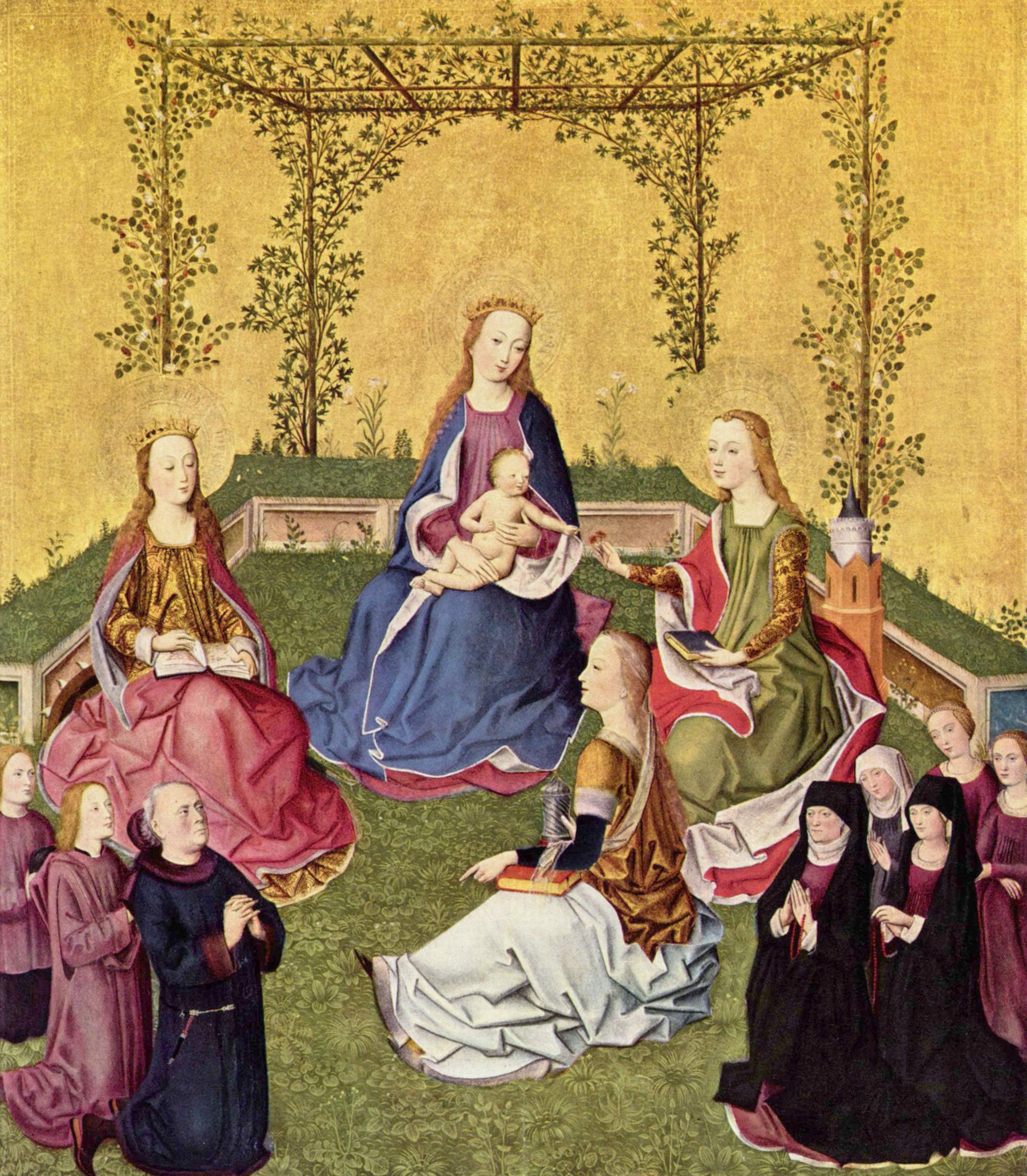
(hortus conclusus)


 Due to its secluded location, the palace survived the destruction of two World Wars. Until 1944, it served as a depot for Nazi plunder that was taken from France by the Reichsleiter Rosenberg Institute for the Occupied Territories (Einsatzstab Reichsleiter Rosenberg für die besetzten Gebiete), a suborganization of the Nazi Party.The castle was used to catalogue the works of arts. (After World War II 39 photo albums were found in the palace documenting the scale of the art seizures. The albums are now stored in the United States National Archives.) oops didn't gave it back
when the nazis did it t'was bad but not the next, and take those scientists too

  - wait, that name 
The Reichsleiter Rosenberg Taskforce (German: Einsatzstab Reichsleiter Rosenberg or ERR) was a Nazi Party organization dedicated to appropriating cultural property during the Second World War. It was led by the chief ideologue of the Nazi Party, Alfred Rosenberg, from within the NSDAP Office of Foreign Affairs (Außenpolitischen Amt der NSDAP or APA). Between 1940 and 1945, the ERR operated in France, the Benelux countries, Poland, the Baltic States, Greece, Italy and on the territory of the Soviet Union in the Reichskommissariat Ostland and Reichskommissariat Ukraine. Much of the looted material was recovered by the Allies after the war, and returned to rightful owners, but there remains a substantial part that has been lost or remains with the Allied powers.

   -- this gets muddier, for the neo-pagan writer
 In 1929 Rosenberg founded the Militant League for German Culture. He later formed the "Institute for the Study of the Jewish Question," dedicated to identifying and attacking Jewish influence in German culture and to recording the history of Judaism from a radical nationalist perspective. He became a Reichstag Deputy in 1930 and published his book on racial theory The Myth of the Twentieth Century (Der Mythus des 20. Jahrhunderts) which deals with key issues in the National Socialist ideology, such as the "Jewish question." Rosenberg intended his book as a sequel to Houston Stewart Chamberlain's above-cited book. Despite selling more than a million copies by 1945, its influence within Nazism remains doubtful. It is often said to have been a book that was officially venerated within Nazism, but one that few had actually read beyond the first chapter or even found comprehensible. Hitler called it "stuff nobody can understand" and disapproved of its pseudo-religious tone.
 Rosenberg had also been a member of the Thule Society, along with Eckart, As the Nazi Party's chief racial theorist, Rosenberg oversaw the construction of a human racial "ladder" that justified Hitler's racial and ethnic policies. Rosenberg built on the works of Arthur de Gobineau, Houston Stewart Chamberlain, Madison Grant, the Klansman Lothrop Stoddard as well as on the beliefs of Hitler. Rosenberg placed Blacks and Jews at the very bottom of the ladder, while at the very top stood the white "Aryan" race. Rosenberg promoted the Nordic theory which regarded Nordics as the "master race", superior to all others, including to other Aryans (Indo-Europeans). He was also influenced by the Judeo-Masonic conspiracy theory promoted by the Catholic counter-revolutionary tradition, such as the book Le Juif, le judaïsme et la judaïsation des peuples chrétiens (1869) by Roger Gougenot des Mousseaux, which he translated into German under the title The Eternal Jew.
---  and the eternal meta-mystic Eckart.?

 Rosenberg got the racial term Untermensch from the title of Stoddard's 1922 book The Revolt Against Civilization: The Menace of the Under-man, which had been adopted by the Nazis from that book's German version Der Kulturumsturz: Die Drohung des Untermenschen (1925).
Rosenberg reshaped Nazi racial policy over the years, but it always consisted of Aryan supremacy, extreme German nationalism and rabid antisemitism. Rosenberg also outspokenly opposed homosexuality – notably in his pamphlet "Der Sumpf" ("The Swamp", 1927). He viewed homosexuality as a hindrance to the expansion of the Nordic population.

Though Rosenberg does not use the word "master race". He uses the word "Herrenvolk" (i.e. ruling people) twice in his book The Myth, first referring to the Amorites (saying that Sayce described them as fair skinned and blue eyed) and secondly quoting Victor Wallace Germains' description of the English in "The Truth about Kitchener". ("The Myth of the Twentieth Century")

 http://avalon.law.yale.edu/imt/judrosen.asp
the more you look the more [british] you find

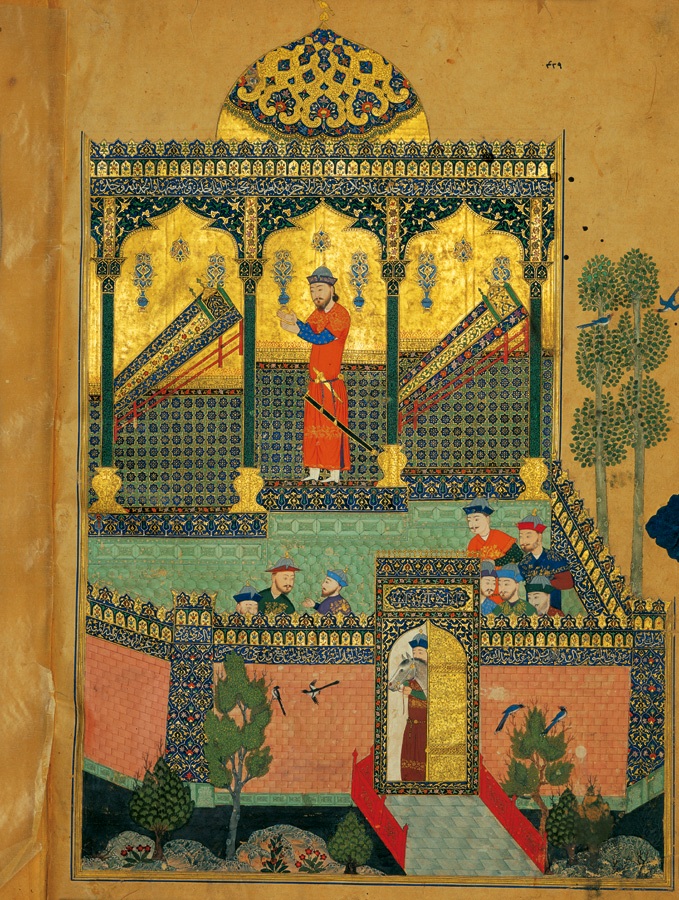
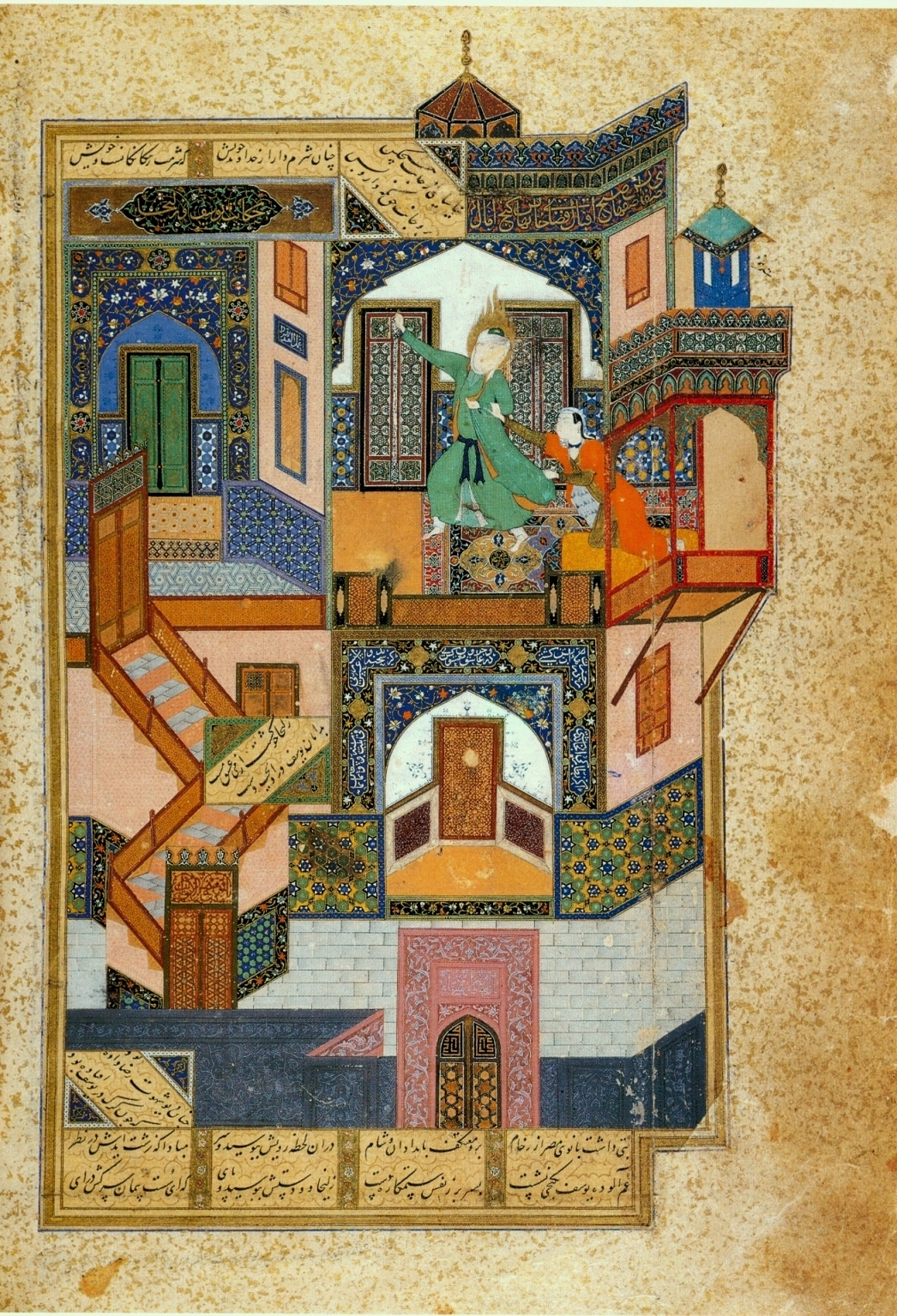
some persian style ?


 how i like internet, with its obscurantist propaganda,
i like the games promoting mythical slavery thinking,
ubiquious is recommanding american science-fantasy-topia,
i like american standardizing over everything,
first they went for showing off their vanity-crosses now they go showing off vanity-crotches

the lies that live rentfree in your heads, keep up the spirit
&
prendre des vessies pour des lanternes, see the swamps for golan-heights /golum heights ?

men of clay and the genie energy (wiki that)  for the 1%


any talos for tales

there's more dots than one can connect, comically, they align thmselves

from giddeon wars to the unicorn annunciation,  a small step for man


santa barbara outside / the meaning of the tower i assume is other-ish
this "unicorn annunciation" from  "Hunt of the Unicorn Annunciation"
another santa barbara , "what happened"- mystification

The Virgin Mary as hortus conclusus
not unlike...plato's cave (vessel) or the womb (grail)
https://en.wikipedia.org/wiki/Hortus_conclusus
wiki's more sjw everytime, try shift that out

when insistance is on  Netherlandish were dutch is the word
i'll throw a Beeldenstorm card  fwiw
https://en.wikipedia.org/wiki/Beeldenstorm

sjw's like martyrs for religions too,
scapegoat memetics is how rulers rule,
with the law of scapegoat memetics,
until the heaps of ruins

circusses


nobility vs commoner?
the sword against the beast or
the academic class against the working class


destroying the pillars of the dual principal
                                                   furthering obscurantism was aimed
                                                     identity politic for transhumanism

                                                       come on in, the water's lovely